


Irish scientists develop turbine for fish migration and energy generation
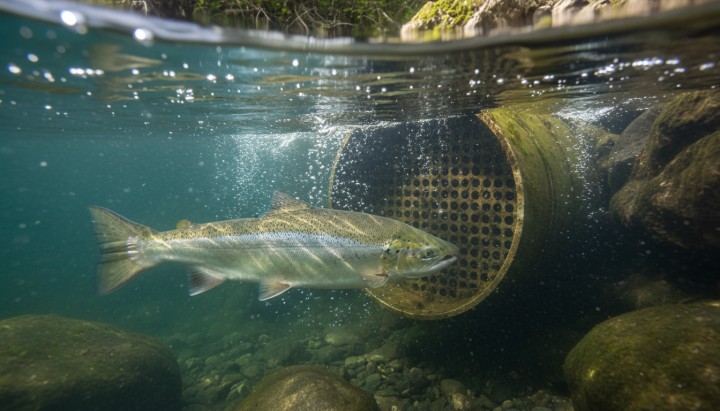
Researchers from Trinity College and University College Dublin have developed a prototype system that helps fish bypass river barriers while simultaneously generating renewable electricity. The technology is proposed as a cost-effective alternative to full barrier removal, potentially reducing expenses by 50–85%. The prototype was successfully tested at a fish farm in Ireland using both artificial and live fish.
The findings indicate that the system may support EU goals for river restoration and renewable energy development. The study was published in Energies.
The EU’s new Nature Restoration Law highlights the need to address environmental issues caused by river barriers, yet dismantling them is often limited by high costs and regulatory challenges. Engineers aimed to create a solution that benefits both ecology and finances.
The modified barrier design allows safe fish passage upstream and downstream while generating electricity through a fish-friendly pump-turbine unit. Under normal flow, the system produces energy; at low water levels, it switches to pumping mode. Such sustainable hydropower can enhance grid flexibility alongside growing solar and wind generation.
Ireland has about 73,000 river barriers, and removing one costs 200,000–500,000 euros. Although removal restores habitats, it eliminates the possibility of converting barriers into small hydropower plants, reducing potential contributions to the national target of 80% renewable electricity by 2030.
The system is designed for species protected under the EU Habitats Directive, including Atlantic salmon, European eel, and river lamprey. Further studies will assess renewable energy potential and impacts on fish. With refinement and certification, the system may play a key role in nature restoration and climate action plans. The research was funded by Research Ireland under the Subscrew Hydro Project.